
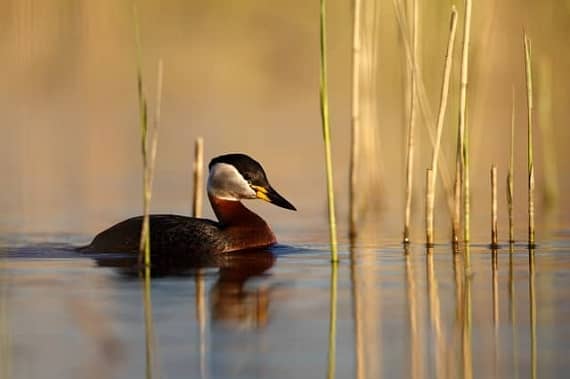
Each spring and fall, the Straits become a natural crossing point for migrating birds. Thousands pass through this narrow stretch between Lake Michigan and Lake Huron. Many stop here. Some stay longer than expected.
You do not need to be an expert to notice it. You just need to slow down.
How the Straits Shape Bird Migration
St. Ignace sits at a natural funnel point. Birds moving between peninsulas and along the Great Lakes shoreline often follow this route.
That creates a mix you do not always see in one place.
Open water brings waterfowl and diving birds. Shoreline edges attract waders. Nearby woods hold songbirds moving through cover. On the right day, raptors move overhead, riding the wind along the lake.
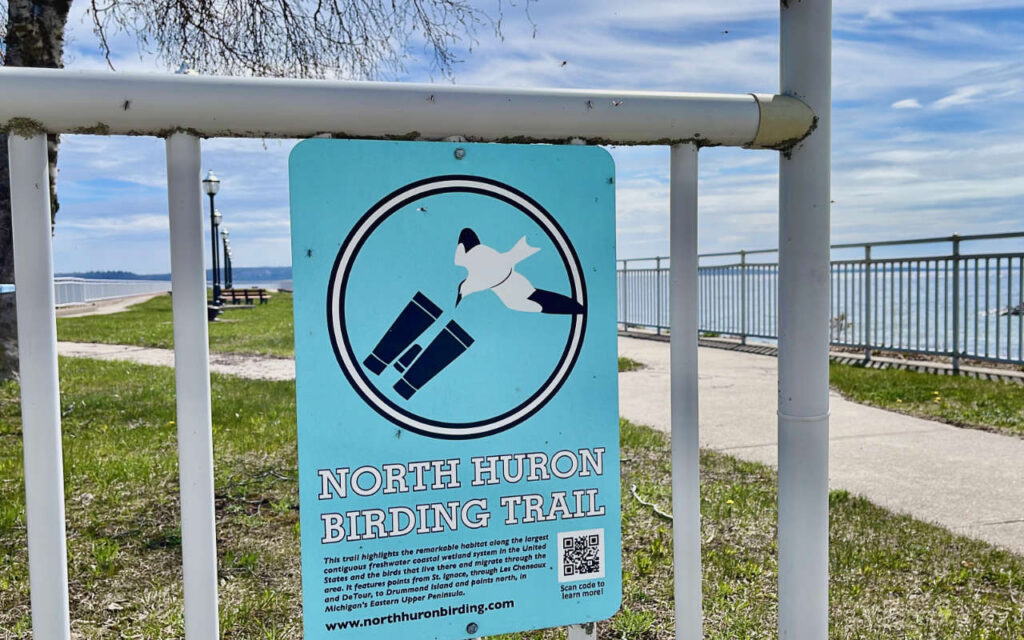
St. Ignace also connects to the broader North Huron Birding Trail, a network of shoreline and inland stops that extends east toward De Tour Village and Drummond Island, giving visitors a reason to follow the shoreline and experience how bird movement changes from one location to the next.
What You Might See
The birds you notice will depend on season, weather, wind, and where you stand.
Along the shoreline, watch for waterbirds using the open water and nearshore edges. Ducks, mergansers, loons, gulls, and other water-associated birds may appear offshore or move along the Straits. These birds are drawn to the water itself, but also to the way the shoreline creates a travel edge.
In wooded areas and trail corridors, spring and fall can bring songbirds moving through in waves. Warblers, sparrows, thrushes, vireos, and other smaller migrants often use trees, shrubs, and brushy edges as temporary stopover habitat. Great Lakes research has shown that landbird migrants are often abundant in nearshore habitats during migration, which makes shoreline-adjacent woods especially valuable during travel periods. (umgljv.org)
Overhead, the Straits are known for raptors. Red-tailed Hawks, Broad-winged Hawks, Bald Eagles, Golden Eagles, Turkey Vultures, Sharp-shinned Hawks, Northern Harriers, Peregrine Falcons, and other birds of prey may move through the region. Mackinac Straits Raptor Watch has documented long-term changes in raptor numbers at the Straits. (Mackinac Straits Raptor Watch)
This variety is what makes the experience interesting. One visitor may notice ducks along the water. Another may hear songbirds in the trees. Someone else may look up at the right moment and see a hawk riding the air toward the crossing.
Where to Go
Beginning off US-2 on Boulevard Drive, Pointe La Barbe sits at the edge of the Upper Peninsula, where land meets open water.
This location is widely recognized as one of Michigan’s strongest migration points. A large marsh just offshore creates feeding and resting habitat, while the nearby Green Island draws in birds moving through the Straits.
From here, you can often see hawks moving along the shoreline and large numbers of shorebirds working the edge between land and water. Green Island also supports one of Michigan’s largest colonies of Ring-billed and Herring Gulls, sometimes numbering in the tens of thousands.
Take time to scan the shoreline vegetation. Smaller birds often stay low, using the cover of shrubs and trees to rest during migration.
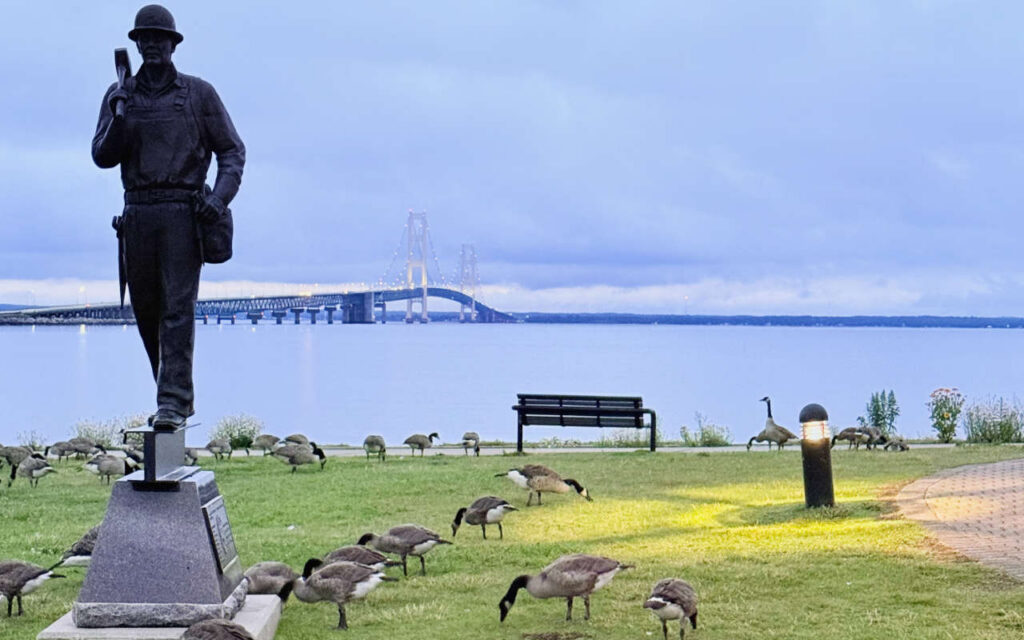
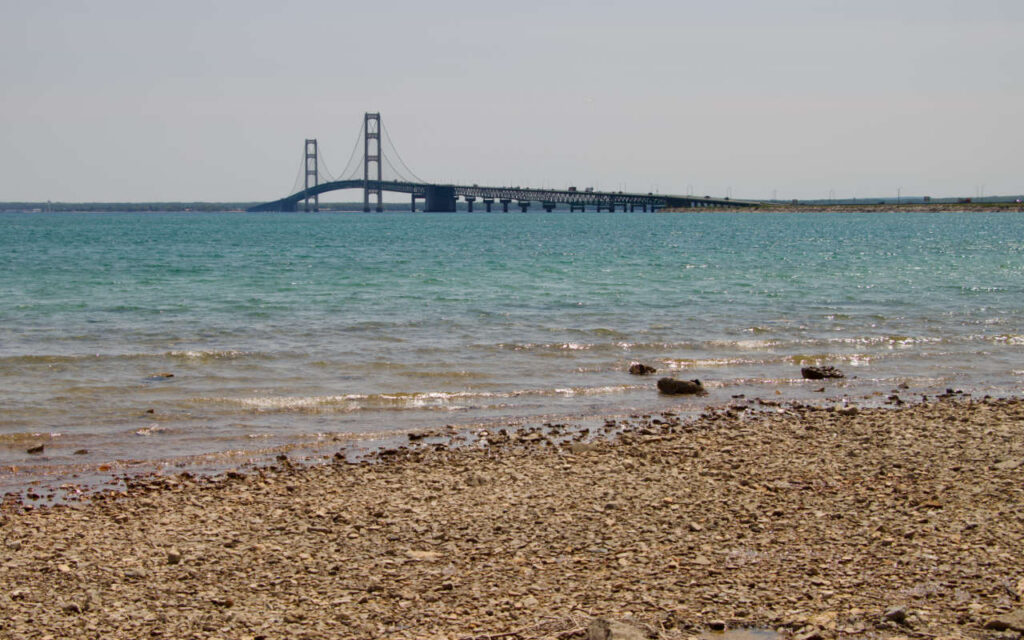
Continuing east along Boulevard Drive, about one and a half miles from Pointe La Barbe, Bridge View Park opens up to wide views of the Straits and the Mackinac Bridge.
This stretch of shoreline is known for large concentrations of waterfowl. During migration, you may see some of the largest rafts of Redheads in Michigan gathered offshore.
Wind plays a role here. Changing conditions can shift birds closer to shore, making this a place where patience and timing can change what you see from one visit to the next.
Straits State Park offers a different experience. A small network of trails moves through northern forest, creating a sheltered environment compared to the open shoreline.
Songbirds are often heard before they are seen here, especially during spring and early fall migration. Warblers and other small birds use this type of habitat to rest and feed between longer flights.
The mix of species reflects the landscape. Northern white cedar, quaking aspen, and beaked hazelnut provide structure and cover, making this a reliable stop for birds seeking protection from wind coming off the Great Lakes.
This area also supports large numbers of diving ducks in nearby waters, adding another layer to what you may observe.
Dock #3 /U.S. Coast Guard Station St. Ignace
From Straits State Park, return to US-2 and head east toward Ferry Lane. This route leads to the U.S. Coast Guard Station area, often referred to as Dock #3.
This location combines access to open water with close shoreline views. It also offers a more relaxed setting, with a picnic area and space for families.
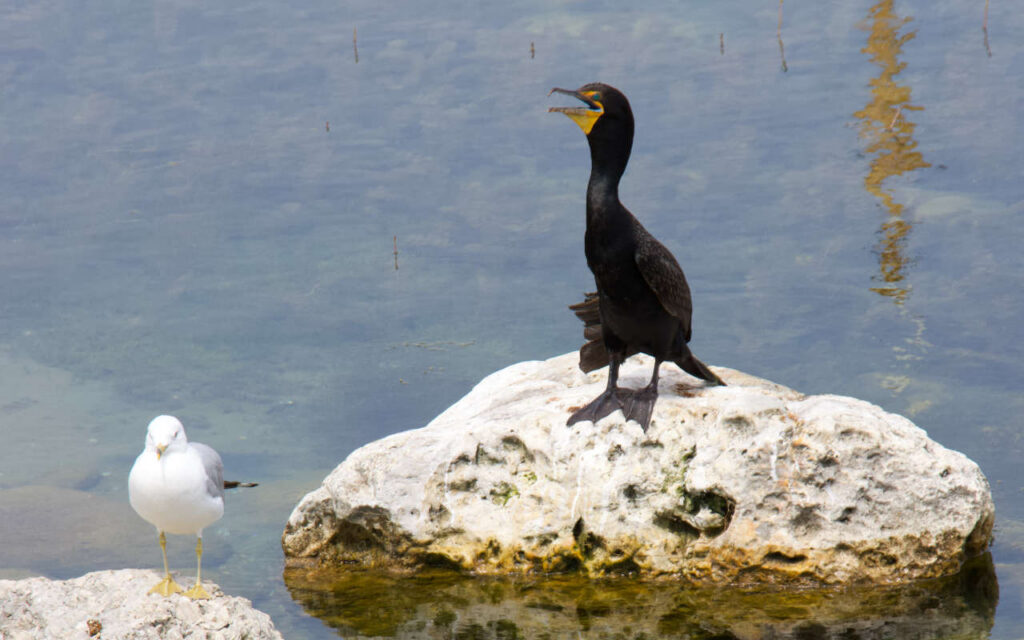
On calm days, this becomes one of the best places in the region to watch deep water diving ducks. Long-tailed Ducks, Horned Grebes, Scoters, and Common Loons are often visible near the docks.
Between bird activity, you’ll also see ferries and boats moving through the Straits, adding to the sense of movement that defines this area.
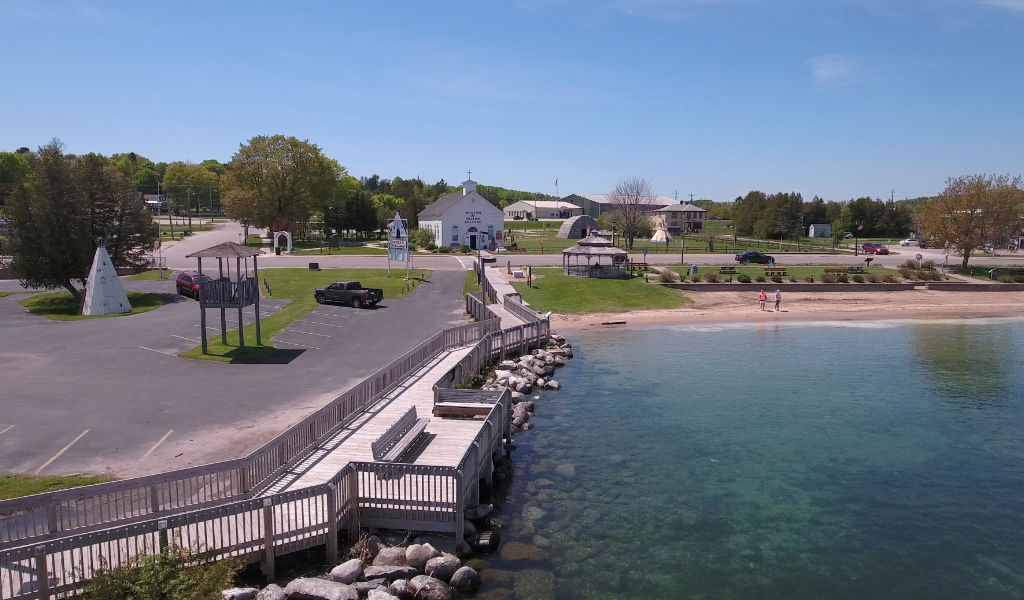
Following the shoreline along State Street leads to the Huron Boardwalk, a mile-long stretch that runs through much of downtown.
This is one of the easiest places to experience birding in St. Ignace. The open water, shoreline edge, and nearby vegetation create a mix of activity without requiring a long walk.
During peak migration, swallows can often be seen feeding over the water. Warblers and other small birds may appear in the shrubs and trees along the boardwalk.
At the eastern end, the Wawatam Lighthouse marks a shift in the shoreline, where birds often follow the edge as they move along the Straits.
Just beyond, American Legion Park opens up into a wider space along the water. With picnic areas, open shoreline, and fewer obstructions, it becomes a place to slow down and watch longer. This is a good spot to observe waterfowl and passing birds while staying close to town.
To complete the route, head north on I-75 to Exit 352, then follow US-123 and Mackinac Trail to Carp River Road.
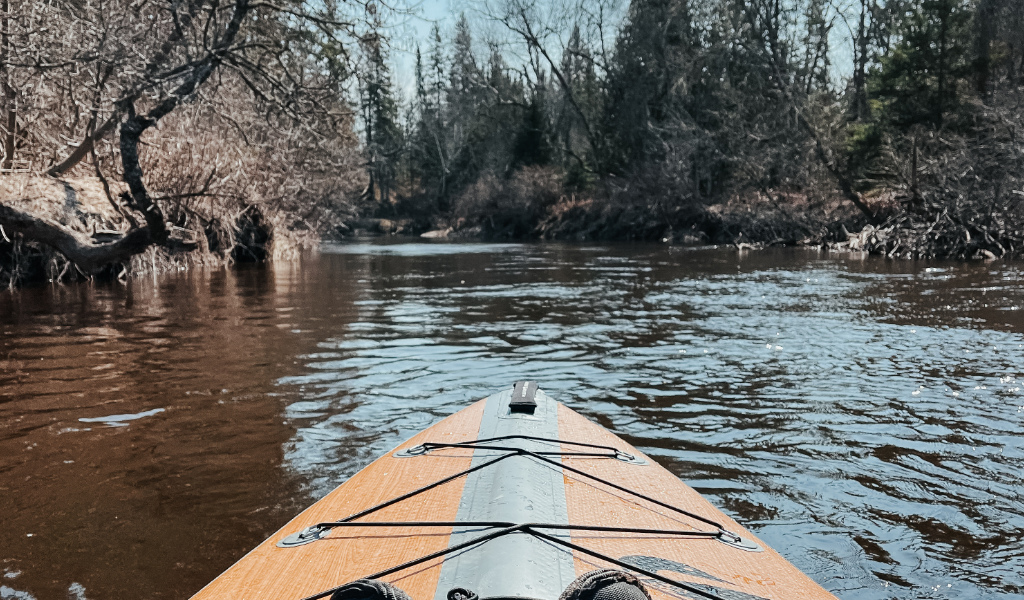
At the river mouth, freshwater movement meets Lake Huron, creating another transition zone that attracts birds.
This area is known for waterfowl and migrating songbirds, along with raptors that move through the corridor. Broad-winged Hawks, Cooper’s Hawks, and Bald Eagles are often seen in the area, along with Northern Harriers and flycatchers.
The combination of open water and river habitat creates a quieter but active stop, especially for those willing to spend time watching.
When to Visit
Spring and fall are the strongest seasons.
Migration brings the highest activity, especially in the early morning and late evening hours. Wind direction and weather can change everything from one day to the next.
Summer slows down, but does not go quiet. You will still find birds settled into the area.
In winter certain species remain, especially near open water, offering a different kind of observation.
Each stop along the North Huron Birding Trail reveals a different part of the same system. Shoreline, forest, marsh, and open water all work together, creating a place where migration becomes visible.
Spend a little time here, return to the water more than once, and you will start to see it unfold. Stay a little longer and make St. Ignace your base for exploring more places to stay, local dining, and outdoor experiences across the Eastern Upper Peninsula.